Àdìre Eléko in a Brief

Àdìre eléko (starch resist pattern)
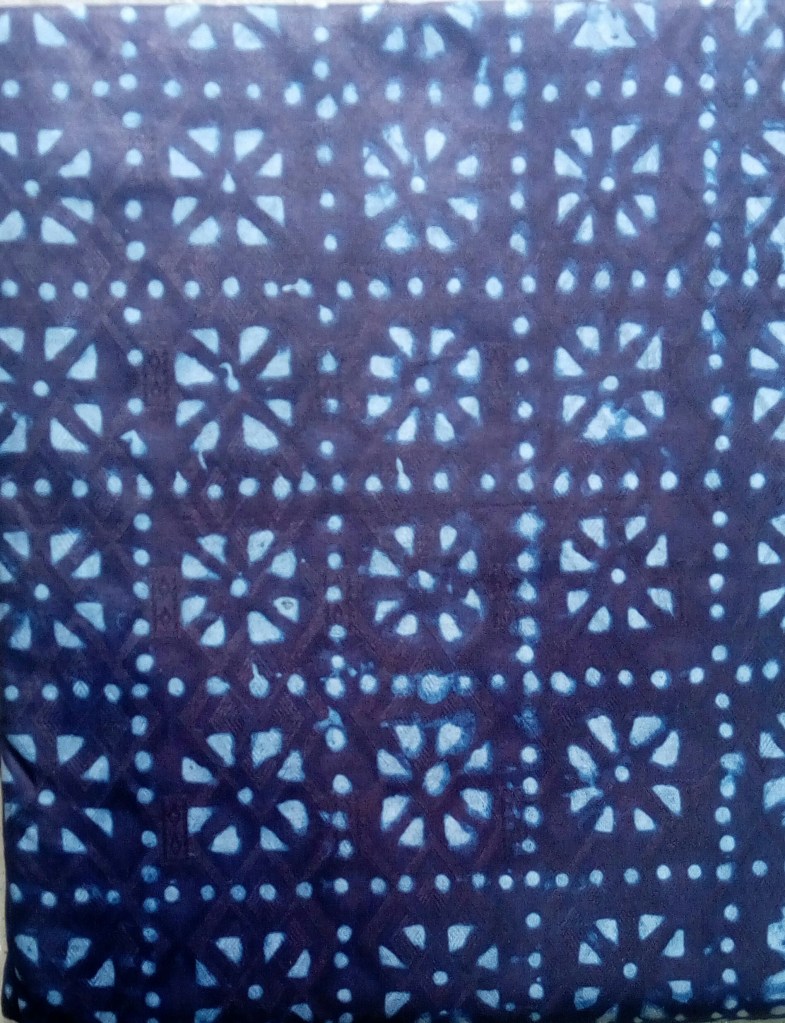
Source: Àdìre eléko from oladclothier

Àdìre Eléko is one of the ancient techniques of making Àdìre/Kampala in the state of Ogun,Abeokuta to be precise. This technique is only taught and learnt within the family. Some particular family in Abeokuta the Ogun State capital are the master of this particular art and it remains so till today.

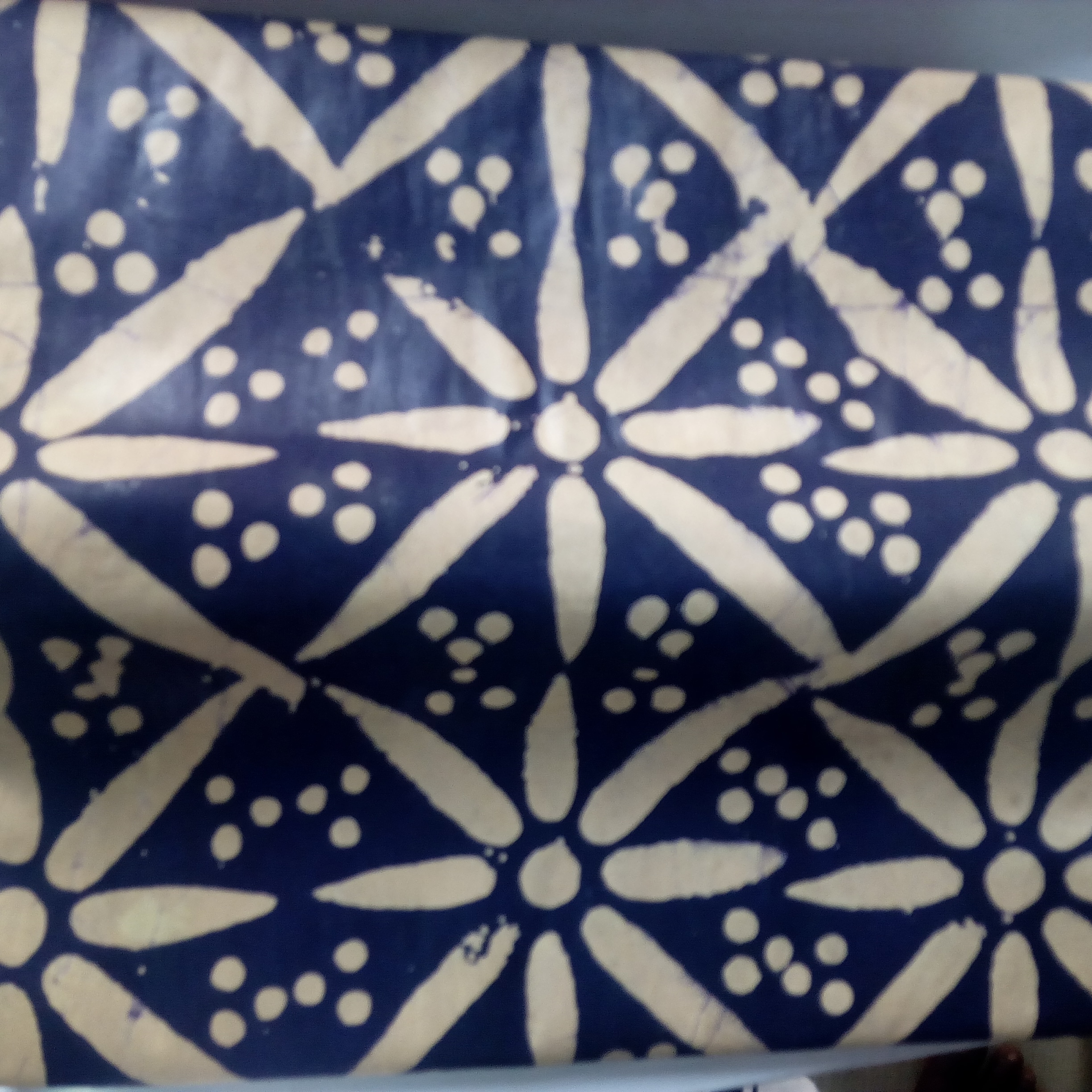
Cloths decorated by using starch made from cassava flour to resist the indigo dye were known as Àdìre Eléko. The starch will only be applied to one side of the cloth so the underside would be plain blue. The use of starch allows for a greater variety in the patterns that can be created.

Traditionally,it is done with different size chicken feathers, calabash carved into different designs are also used, in a manner similar to block printing. Starch could be applied through a stencil or painted on to the cloth freehand like machine sewing, both cutting the stencil and using it were activities performed by men. The starch was applied using a piece of metal; a comb-like device could be used to create patterns in thickly applied starch. The size and complexity of the stencils varied a great deal.

Complied by Sultan

@oladclothier hayobamidele39@gmail.com
Batik in a Brief

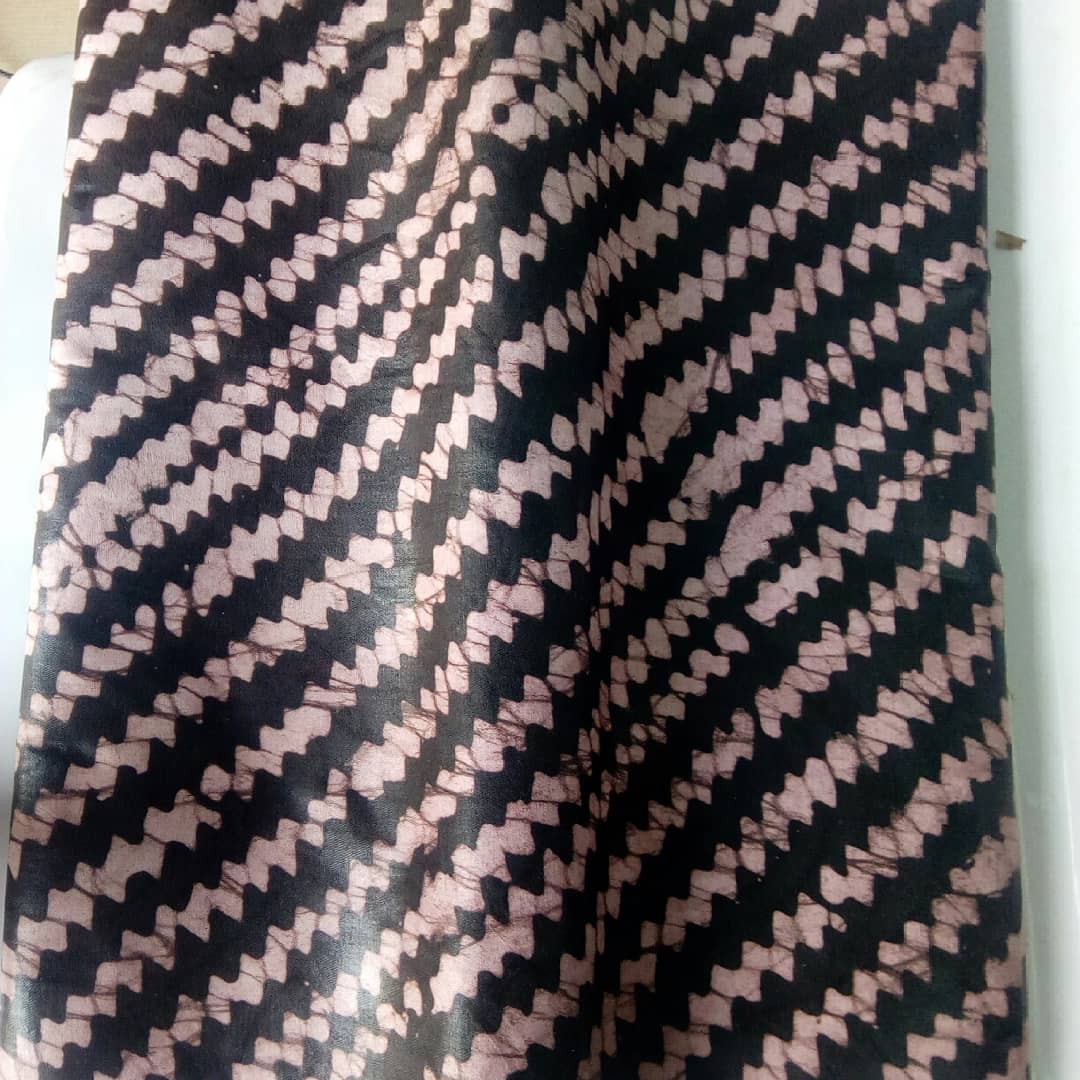
This is a resit method of making designs on fabric. In this technique of dyeing, parts of fabric are coated with wax, resulting in varying patterns or colors. When the wax cracks, resulting in fine lines or streaks which forms beautiful designs.

Topnotch Batik.

Complied by sultan

@oladclothier

hayobamidele39@gmail.com
Fabrics in a Brief

Angora fibres

Angora fibre.

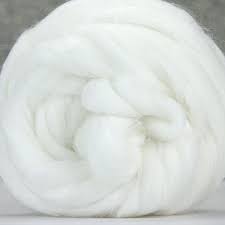
Angora rabbit fibre is one of the finest specialty animal fibres with its well known reputation for fineness, lightness and softness. The Angora rabbit (Oryctolagus cuniculus) is raised solely for its fine and soft hair, unlike other breeds which are reared for their meat and fur. This is different from Mohair which comes from Angora goat. The rabbit is bred for its soft wool. Used to make sweaters and accessories. Today, China is the leading producer in the international Angora fibre market. Germany, France, Chile, Argentina and New Zealand are the other countries involved in Angora rabbit hair production. The down fibres are very smooth, with few cuticles scales. The Angora rabbit produces hairs of several colours, but the strain bred for textile fibres is an albino strain that produces white fibres only. Colored Angora rabbits are raised in India for the manufacture of undyed artisanal fabric with muted colour motifs.

Complied by Sultan. hayobamidele39@gmail.com


Adire/Kampala in a Brief

Adire

Adire is a resist-dyed cloth produced and worn by the Yoruba people of southwestern Nigeria in West Africa. The Yoruba label adire, which means “tied and dyed,” was first applied to indigo-dyed cloth decorated with resist patterns around the turn of the twentieth century. With the introduction of a broader color palette of imported synthetic dyes in the second half of the twentieth century, the label “adire” was expanded to include a variety of hand-dyed textiles using wax resist batik methods to produce patterned cloth in a dazzling array of dye tints and hues.

The Art of Making Adire

The traditional production of indigo-dyed adire involves the input of two female specialists-dyers (alaro), who control production and marketing of adire, and decorators (aladire), who create the resist patterns. In the oldest forms of adire, two basic resist techniques are used to create soft blue or white designs to contrast with a deeply saturated indigo blue background. Adire oniko is tied or wrapped with raffia to resist the dye.Adire eleko has starchy maize or cassava paste hand-painted onto the surface of the cloth as a resist agent. Further experimentation led to two additional techniques. Adire alabere involves stitching the cloth with thread prior to dyeing to produce fine-lined motifs. Adire batani is produced with the aid of zinc stencils to control the application of the resist starch.

The major Àdìre/Kampala market is located in Itoku market (Abeokuta South local government) Ogun State. It is being sold in this market for centuries.The most interesting facts about Eleko and Oniko is that the art is not taught to anybody who is an outsider, to be an expert in the art of àdìre oniko and eleko you most a member of the family. The art and designs are most time based on some significant cultural heritage.

Complied by Sultan hayobamidele39@gmail.com